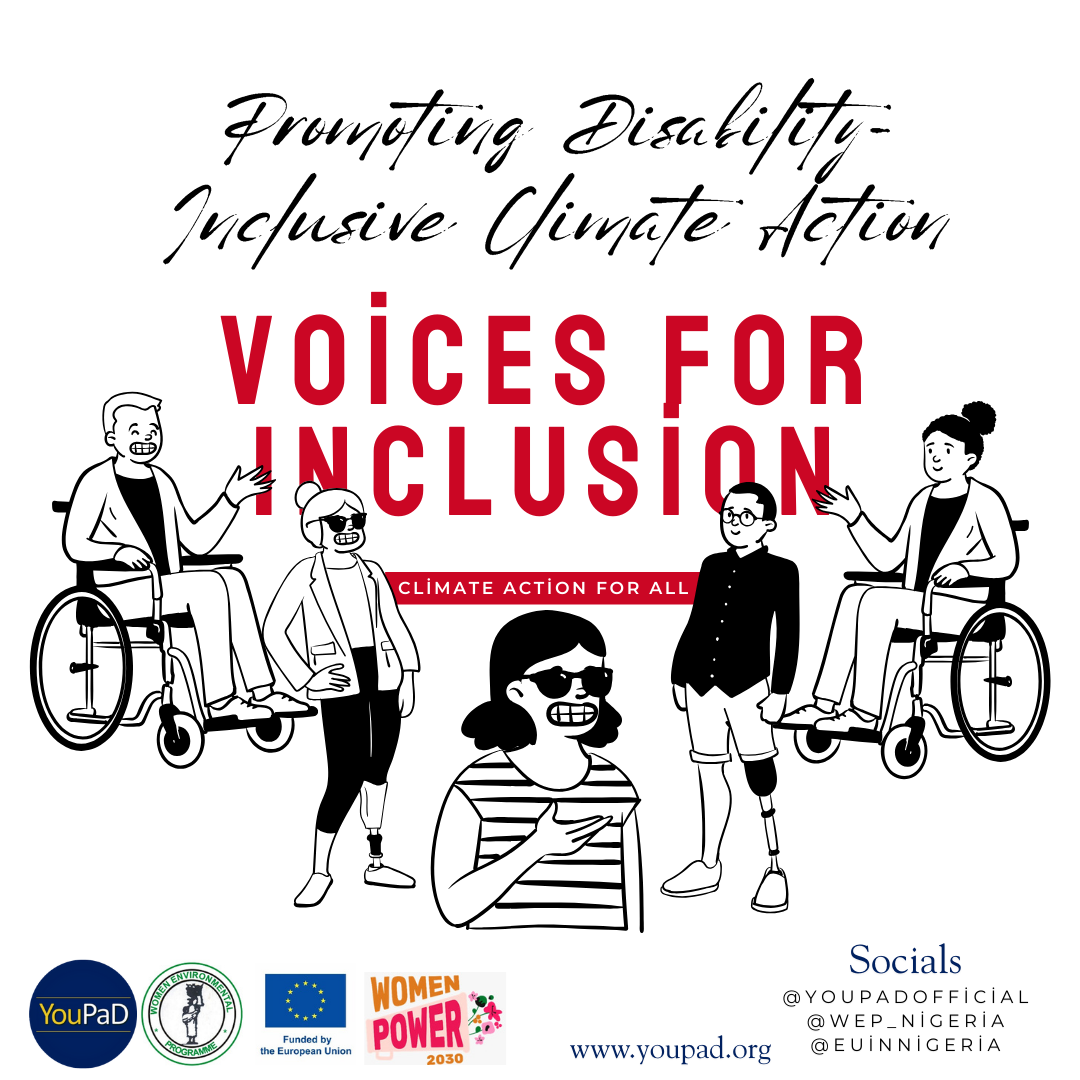
Disproportionate Climate Impacts on Persons with Disabilities in Nigeria
This report assesses the critical intersection of climate change and disability in Nigeria, revealing that the nation's 35 million persons with disabilities face up to a fourfold higher mortality risk during climate-related disasters. Key findings highlight systemic failures, including inaccessible emergency shelters and incomplete policy implementation, which amplify vulnerabilities to regional threats like flooding in the South and extreme heat in the North. The analysis underscores the urgent need for inclusive climate adaptation and policy reform.
The Invisible Crisis
Climate Change Impacts on Persons with Disabilities in Nigeria
For Nigeria's 35 million persons with disabilities, climate change is not a future threat—it is a present-day multiplier of inequality, poverty, and mortality.
The Scale of Vulnerability
The intersection of disability and climate instability creates a "death gap" driven by poverty and exclusion.
35 Million
Persons with Disabilities
Roughly 15-20% of Nigeria's population faces heightened risks.
70%
Living in Poverty
Financial inability to afford "climate-smart" adaptations.
4x
Mortality Risk
Higher likelihood of death/injury during disasters vs general public.
Disaster Mortality Risk Multiplier
Risk Factor (x times)
The "Death Gap"
Data indicates that during climate-driven disasters (like the floods in Kogi and Bayelsa), persons with disabilities are up to four times more likely to lose their lives.
This is not due to the disability itself, but due to failures in planning: inaccessible early warning systems (lack of sign language) and physical barriers in evacuation routes.
A Tale of Two Climates
Nigeria's geography splits the crisis: devastating floods in the South and lethal heat in the North.
South: The "Double Fare" Burden
In flood-prone states like Bayelsa and Rivers, wheelchair users face discriminatory pricing during canoe evacuations, forcing many to abandon their mobility aids.
Estimated Cost (Currency Units)
Estimated cost comparison during emergency evacuation
North: The Thermoregulation Gap
In the Sahel, frequent 45°C+ heat is life-threatening for individuals with spinal cord injuries or albinism due to physiological limitations.
Temperature (°C)
Max Safe Threshold: 37°C
Physiological Safe Limit vs. Climate Reality
Systemic & Structural Barriers
Policies exist on paper, but infrastructure and implementation leave millions behind.
Emergency Shelter Accessibility
90% of government-designated shelters lack ramps, wide doorways, or accessible latrines, creating unsanitary and undignified conditions.
Inaccessible
Accessible
Disability Act Domestication
Only 23 of 36 states have fully domesticated the 2018 National Disability Act, leaving many without legal leverage for inclusive climate action.
Domesticated (23 States)
Pending (13 States)
Pathways to Resilience
Disability-led organizations in Nigeria are bridging the gap. Supporting them is the most effective way to ensure climate justice.
JONAPWD
Pushing for a "Disability Desk" and voting rights in the National Council on Climate Change.
AWWDI
Signed historic MoU with NiMet to translate weather reports into Braille and Sign Language.
CDIA
Leading the #WheelchairNotLuggage campaign to end discriminatory evacuation fares.
RHOWI
Providing specific disaster relief and mobility aid replacements for wheelchair users in flood zones.
Data sourced from 2024-2025 Climate Reports, NiMet, and NEMA analyses.
© 2026 YouPaD Intelligence Hub | Promoting Inclusive Climate Action