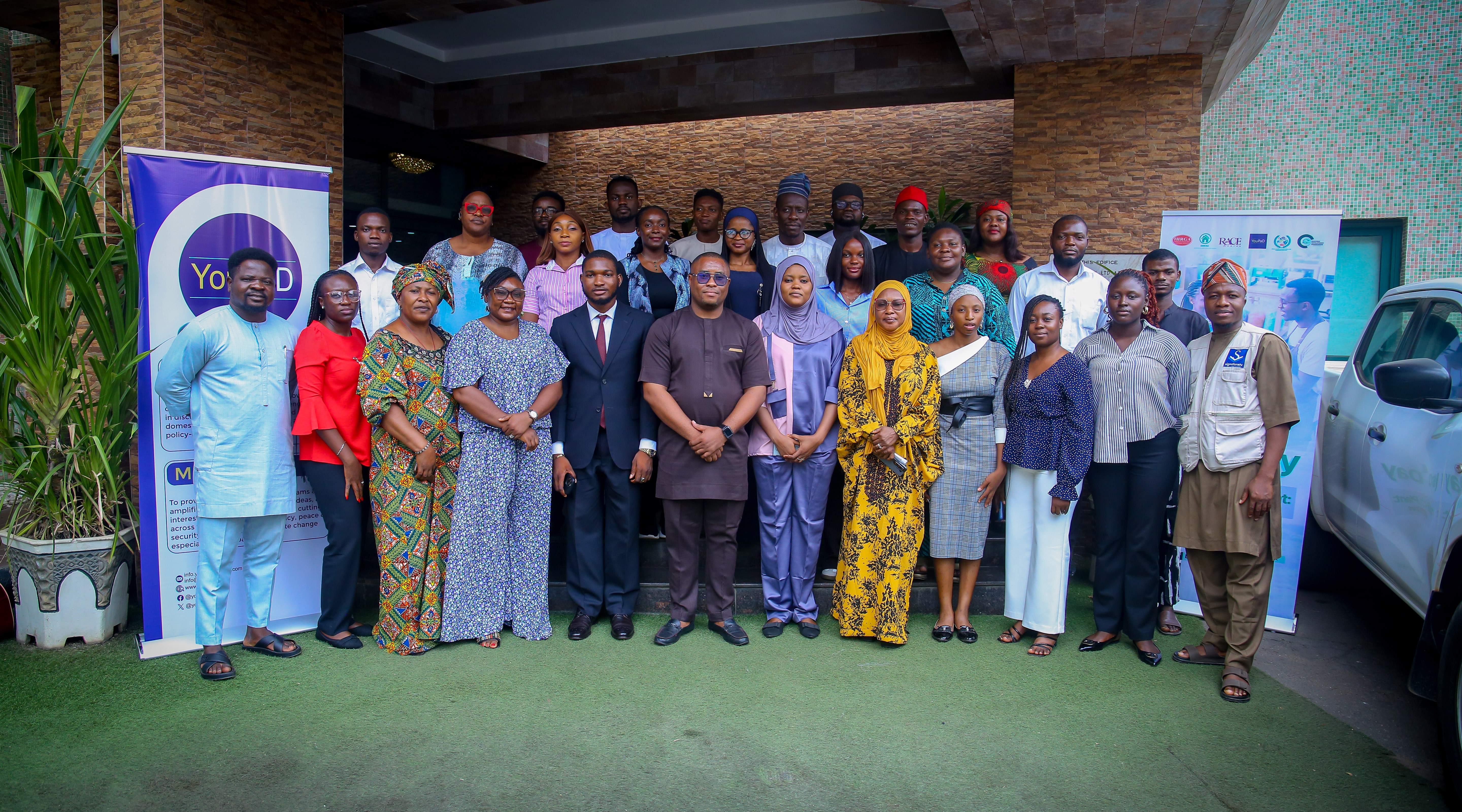
Earth Day 2026 Report: Circular Economy & Youth-Led Plastic Waste Solutions in Nigeria
The Earth Day 2026 convening, themed 'Our Power, Our Planet: Turning Plastic into Possibilities,' highlighted circular economy opportunities in Nigeria and Sub-Saharan Africa, with a focus on youth entrepreneurship in plastic recycling. Key findings include the recovery of 300,000+ kg of PET plastic by CycleX Africa, a projected $350 billion circular economy opportunity by 2030, and policy advocacy around the NESREA 2024 Plastic Waste Management Act. Panel discussions emphasized mindset shifts from waste as pollution to waste as economic opportunity, practical entry points for youth, required health and safety measures, and major entrepreneurial challenges including limited finance access and unstable policy environments.
Our Power, Our Planet
OUR POWER, OUR PLANET: TURNING PLASTIC INTO POSSIBILITIES
A comprehensive report on the Earth Day 2026 convening focusing on circular economy solutions, youth-led innovations, grassroots policy domestication, and enterprise growth models in Nigeria and Sub-Saharan Africa.
Opening Remark
Program Host: Sophie
The opening remarks welcomed distinguished guests, speakers, partners, and colleagues to the Earth Day 2026 event, themed “Our Power, Our Planet: Turning Plastic into Possibilities.” The speaker emphasized that the gathering was more than a convening; it was a shared statement of commitment and a reminder that environmental action is strongest when it is collective, practical, and rooted in partnerships.
She noted that for too long, plastic has been the emblem of a throwaway culture, clogging oceans and filling landfills with materials that will outlast future generations. However, she stressed that the narrative is changing. Plastics are now being reimagined as part of a circular economy that can generate value, create jobs, and contribute to a sustainable future. She highlighted that plastic pollution is not only an environmental issue but also a development, economic, and governance issue.
The speaker called on participants to recognize that our power lies in the choices we make, the solutions we build, and the systems we reshape.
Three Core Commitments
-
Innovate Relentlessly:
Reimagine plastic waste as economic resources and job creation drivers.
-
Act Decisively:
Move from policy dialogue to tangible field execution and enforcement.
-
Amplify Others:
Focus support on front-line communities most impacted by pollution.
Panel Session 1: Youth, Innovation & The Recycling Value Chain
Moderator: Imoh Uche Frank
Blessing Ekwere
Founder & CEO, Looped Innovation
Social EntrepreneurJulius Akirinde
Founder, Eureka Standards Plus
Environmental ServicesAbdullahi Suleiman
Circular Economy Innovator
Recycling EntrepreneurWaste as an Opportunity (Mindset Shift)
Blessing Ekwere argued that in a country with a large youth population and limited opportunities, young people must create opportunities for themselves. Looking at waste solely as an environmental problem leads people to shift responsibility to the government. Instead, she encouraged youth to take responsibility and see waste as a money-making opportunity. Being one’s own boss is a powerful mindset shift.
Entry Points & Passion (Julius Akirinde)
Entry begins with passion. The value chain is vast: recyclers, activists, educators, researchers, collectors, or middlemen. No PhD or formal education is needed to start, only passion to solve problems. Whether in fashion, construction, packaging, or art, any area removing waste is valid.
Viable Business Models (Abdullahi Suleiman)
Models include sorting, aggregation, processing, and collection. Youth can start small from backyards by gathering neighborhood waste. Starting as a collector, selling to larger recycling companies, and expanding step-by-step leads to sustainable success.
Required Skills & Health/Safety
Abdullahi Suleiman stressed that safety depends on the role:
- Collectors: Health & safety gear including gloves and nose masks.
- Aggregators: Heavy boots, helmets, and safety glasses against toxins.
- Processors: Hands-on technical training on machinery.
Three Major Entrepreneurial Challenges
1. Lack of business skills: Growth fails due to lack of financial/scaling skills. Remedy: fellowships & mentorship.
2. Finance access: Grants exist but require business structure to win.
3. Unfavorable policies: Sudden policy shifts (e.g., Lagos single-use plastic ban) destabilize. Remedy: engage policymakers for phased transitions.
Value-Added Upcycled Plastic Products Gallery
Art Pieces
Converted from agric chemical containers
Jewelry & Bangles
Earrings & accessories trained in FCT/Nasarawa
Household Goods
Useful household wares from shredded plastics
Tech Solutions
Mobile apps connecting waste generators to collectors
Practical First Steps with Zero Capital (Blessing Ekwere)
Panel Session 2: Domestication of Global Waste Policies
Moderator: Benjamin Emeka
Omowaye Pelumi
Communications Officer, Ecocykle
EnvironmentalistKiesha Letom
IHGRA Environmental Expert
Policy SpecialistRahmat Ikeoluwa Ibrahim
Leader, Global Gold Circle
PR StrategistWhat Domestication Truly Means
Kiesha Letom explained that domestication is adapting international policies to Nigeria's local infrastructure and culture—not copying and pasting. Pelumi used an analogy: domesticating a wild animal takes patience and local context compared to raising a domestic one. Policies must adapt whether in Onitsha markets or Abuja suburbs.
The Policy vs. Implementation Gap
Pelumi shared that in Lagos, charging ₦50 per nylon bag changed his buying behavior, but Abuja lacks similar measures. Rahmat highlighted that the major gap is lack of grassroots enforcement and grassroots enlightenment, noting that even educated citizens litter ("educated illiterates").
Integrating Informal Collectors ('Maishara' / 'Babambola')
Informal collectors reach places formal municipal agencies cannot reach. Pelumi & Kiesha recommended integrating them through constructive framework:
Educate on health, safety gear, and standardized sorting instead of criminalizing their activity.
Adopt models like Ecobarter that offer monetary rewards for returns; incentives beat force.
Incorporate collectors into bodies like the Recyclers Association of Nigeria (RAN) for collective bargaining.
Policy Provisions vs. Real-World Implementation Gaps
| Policy Provision | Current Status | Key Implementation Gaps & Solutions |
|---|---|---|
| Single-Use Plastic Limits | Partial Enforcement | Lagos state enforces bag fees; Abuja and state capitals lack uniform enforcement. |
| Extended Producer Responsibility (EPR) | Voluntary / Weak | Producers are not yet held strictly accountable for buy-backs; requires legal compulsion. |
| Grassroots Household Sorting | Low Awareness | Needs public communication, market women education, and doorstep collection systems. |
Fireside Chat: From Waste to Impact
Host: Abubakar Jafar | Guest: Sule Wisdom David (CEO & Founder, CycleX Africa)
"I did not start with a pity party story. I saw that waste is a major problem in Nigeria and Sub-Saharan Africa, and I wanted to make money while creating impact. Solve a problem, make money, create impact."
— Sule Wisdom David, CycleX AfricaCarbon Emission Reduction
Recycling reduces reliance on virgin petroleum plastics, avoiding oil flaring emissions in the Niger Delta. Recycling spans reduction, reuse, sorting, and processing. CycleX converts brewery organic waste in Aba into animal feed.
Decentralized Scaling Model
CycleX empowers individuals and pickers as agents via mobile technology. This model enabled CycleX to expand to over 300 users in Egypt without physical presence.
Hard Lesson: Market Volatility & Price Verification
Wisdom shared how he and a partner bought PET at ₦400–450/kg, expecting sales at ₦550/kg. Overnight price drops to ₦350/kg and logistics costs resulted in a ₦500,000 loss. Lesson: Speed, risk mitigation, and real-time market price verification are vital for survival.
Audience Q&A & Closing Takeaways
How to start with a site but no money?
Wisdom advised defining a budget, focusing on a single plastic material, securing the site, and directly linking up with off-takers/buyers before accumulating stock.
Is government funding reliable?
Wisdom stated that despite policy claims, waste management remains underfunded locally. Entrepreneurs should focus on self-reliance, foreign impact grants, and private buyers.
Closing Remarks by Lois & Ugonna
Lois thanked all participants with special recognition to impromptu panellist Rahmat Ikeoluwa Ibrahim for her spontaneous contributions. Ugonna closed by reminding everyone that protecting the planet is a shared responsibility—turning environmental challenges into sustainable solutions through education and action.
FINAL CALL TO ACTION
Refuse & Reuse
Reject single-use plastics and switch to sustainable alternatives.
Start Small
No capital is too small; initial action matters most.
Innovate Value
Move beyond collection to processing and upcycling.
Enforce & Educate
Pair policy enforcement with grassroots enlightenment.
Solve to Profit
Solve environmental problems first; financial impact follows.