Socio-Environmental Assessment of Oil Extraction and Remediation in Ogoni Land
This report summarizes a field visit to Nigeria's Ogoni land, documenting the severe, ongoing environmental and social impacts of oil pollution, including degraded ecosystems, health crises, and lost livelihoods. While official remediation efforts by HYPREP are ongoing, there is profound community skepticism regarding their efficacy, contrasted by the emergence of resilient, community-led initiatives like solar energy projects.
Intelligence Report
Field Visit Report: Ogoni Land & Port Harcourt
Executive Summary
This report details a five-day field visit to Port Harcourt and various communities within Ogoni land. The objective was to assess the ongoing environmental, economic, and social impacts of oil extraction, evaluate the progress of remediation efforts (specifically by HYPREP), and document grassroots resilience and community-led initiatives such as solar energy transitions.
Daily Engagements
Arrival and Preliminary Interviews
The field team arrived in Port Harcourt and commenced the visit with a series of foundational interviews to set the context for the days ahead.
Kentebe Ebiarido (Environmental Rights Action): Framed oil extraction as a destructive form of extractivism that has eroded social, economic, and cultural life while displacing communities from land and sea. He criticized the Land Use Act for undermining community heritage and warned that ongoing extraction alongside cleanup efforts risks turning remediation into a "smoke screen."
Celestine Akpobari (MIDEEKOR): Voiced deep skepticism regarding the sincerity of cleanup efforts, highlighting the community’s heavily eroded trust in both the Hydrocarbon Pollution Remediation Project (HYPREP) and the oil companies.
Smart Idongesit & Confidence Samuel Otiokor (Kebetkache Women Development Centre): Underscored the gendered dimensions of environmental harm and the central role women play in grassroots resistance and advocacy. They emphasized the 2011 UNEP findings regarding the presence of hydrocarbons in people’s blood and the severe, gender-specific health risks facing women of childbearing age.
To ensure an early start the following day, the team proceeded to Ogoni and lodged at T-Fad Hotel, Nwiyakara.
Kaani Community Engagements
Led by Celestine and designated guide Mr. Friday, the team traveled to Kaani to meet with traditional leadership and engage with local farmers and beneficiaries of a new solar energy initiative.
Community Voices
- HRH Mene Godwin Barikpoa Apere: Reflected on dashed hopes following the arrival of oil companies, speaking of eroded livelihoods, youth disillusionment, and systemic failure of promised compensation.
- Aanu Kalugbene: Shared devastating personal health struggles, including repeated miscarriages and persistent skin diseases, which she directly attributes to prolonged exposure to contaminated water and soil.
- Blessing Joseph: Illustrated the stark contrast between pre- and post-oil spill conditions on her farm, with rotting crops and polluted rivers. Positively, a new solar system has improved household lighting and supports her small-scale economic activities.
- Donald: Explained that he abandoned his education due to economic hardship and the collapse of traditional livelihoods, turning to farming merely as a means of survival.
Spotlight: Solar Installation Training Program
The team interviewed Frank Joel Yigale and Mission Godsgift Stella, beneficiaries of the program.
- ▶Stella: The program empowered women with technical skills and economic independence, breaking gender barriers.
- ▶Frank: The program provides vital upskilling for professionals to prepare for the green energy transition.
Bodo & Bori: Mangroves, Spills, and Civil Society
The team split the day between observing ecological devastation in Bodo and meeting with civil society leaders in Bori.
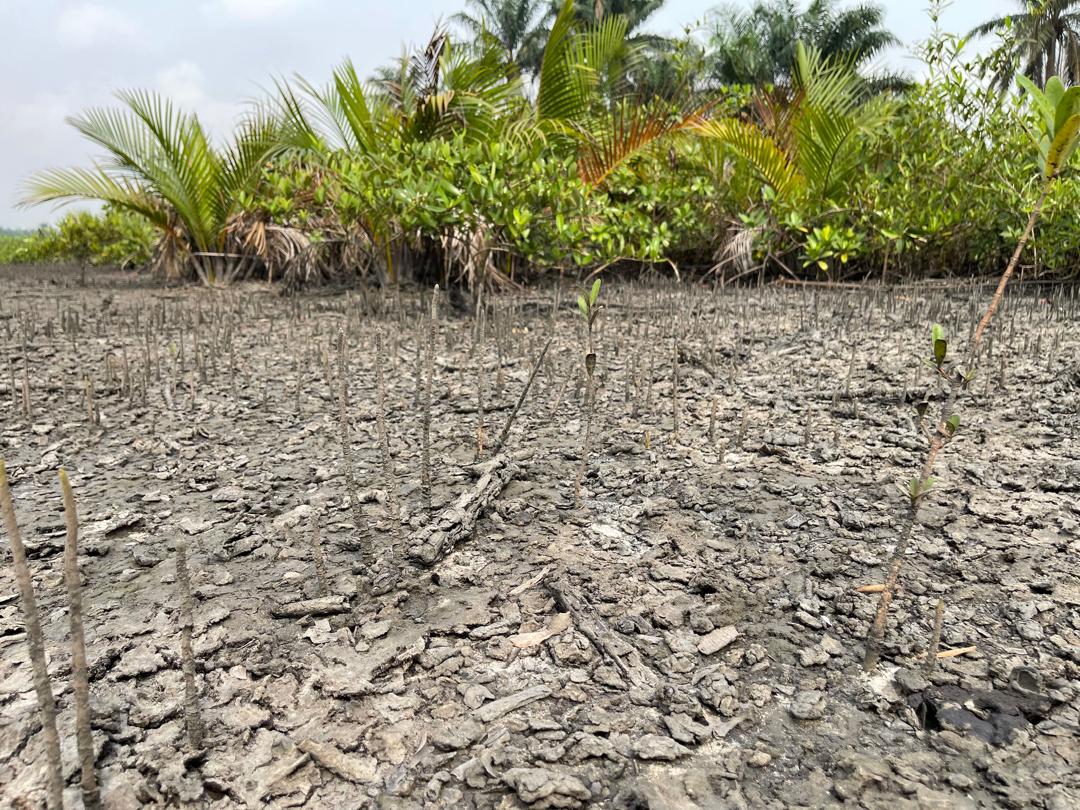
Bodo Community: Ecological Impact
"The destruction of mangroves led to the collapse of fish stocks. We are forced to travel farther for diminishing returns in oil-slicked waters."
Bori: Civil Society Engagements
The team returned to Port Harcourt and lodged at Aldgate Hotel in preparation for the upcoming HYPREP meeting.
HYPREP Engagement and Gas Flaring Site Visit
HYPREP Remediation Progress
Data as reported by HYPREP representatives Enuolare Mba-Nwigoh and Onis Emem. Scope is limited to sites from the 2011 UNEP report.
40
Communities with potable water provision established
Limited Energy Plan
No clear plan for a just energy transition, with limited community ownership and gender inclusion.
Site Visit: Rukpokwu Gas Flaring
The team observed ongoing flaring and heavy soot deposition. This visceral visit reinforced community reports of rampant respiratory illnesses and severe environmental degradation, highlighting the daily, inescapable toll of pollution on public health.
Departure
The team successfully concluded the field visit and departed from Port Harcourt.
Conclusion & Key Findings
This field visit illuminated the enduring environmental, economic, and social impacts of oil extraction in Ogoni land. Testimonies from farmers, fishers, women, and youth revealed a landscape defined by persistent harm, systemic neglect, and, ultimately, profound community resilience.
While official remediation efforts are underway, they remain insufficient in both scope and depth. However, local innovations—such as grassroots solar energy projects—offer vital glimpses of a just energy future. These initiatives require scaling, comprehensive policy support, and inclusive, community-led planning.
The voices heard during this visit strongly reaffirm the urgent need for justice-driven remediation, absolute gender equity, and sustainable development rooted deeply in community agency and environmental integrity.